


5 Hidden Challenges Children & Young People Are Dealing With — And How Holiday Programmes Can Help

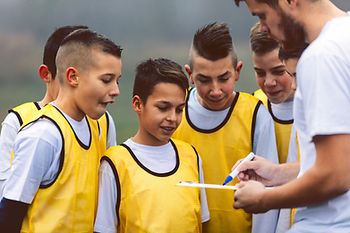
A child walks into a holiday programme... ...they might look excited. They might look bored. They might head straight for their friends. They might sit quietly at the edge of the room.
But what we see isn't always the whole story.
Children and young people can arrive carrying worries, insecurities and pressures that we know absolutely nothing about — and those things can have a huge impact on whether they join in, make friends, try something new or even come back tomorrow.
The good news?
Holiday programmes have an incredible opportunity to help.
Not by turning every activity into a wellbeing lesson, but by creating environments where children feel welcome, included, capable and able to have fun.
Here are five challenges that might be hiding beneath the surface — and some simple ways programmes can respond.
1. “I don't know anyone here.”
The challenge: Loneliness & belonging
Walking into a room full of unfamiliar faces can feel enormous.
For a six-year-old, that might look like clinging to a parent or refusing to join an activity.
For a teenager, it might look completely different: headphones in, appearing uninterested or deciding not to walk through the door at all.
Sometimes what looks like “they don't want to join in” is actually “I don't know how to join in.”
TRY THIS →
Don't always ask children to “find a partner”. For the child who doesn't know anyone, those three words can instantly reinforce the feeling that they don't belong.
Instead:
Create the pairs or teams for them.
Use challenges where everyone has a role.
Start with quick, low-pressure group activities.
Give new children an immediate job or purpose.
Belonging doesn't always happen naturally. Sometimes we need to prepare for it.
2. “What if I'm rubbish at it?”
The challenge: Confidence & fear of failure
Children don't always tell us they're worried about failing.
Sometimes they'll tell us the activity is boring.
Sometimes they'll mess around.
Sometimes they'll refuse to try.
And sometimes they'll stand back and watch.
Because appearing uninterested can feel much safer than trying something and getting it wrong in front of everyone else.
TRY THIS →
Create activities where success isn't simply about being the fastest, strongest or getting every answer right.
Try:
Different levels of challenge.
Team goals rather than individual winners.
Creative activities with no single “correct” answer.
Celebrating effort, ideas and improvement.
Giving children another way to participate if they don't want to be centre stage.
A small moment of “I did it!” can be far more powerful than we realise.
3. “Everyone else seems better than me.”
The challenge: Comparison & self-esteem
Children have always compared themselves with other children.
Who runs fastest? Who's funniest? Who gets the best marks? Who has the most friends?
But as children get older, another layer appears.
Phones and social media can provide an almost constant window into everybody else's lives — their friendships, clothes, appearance, achievements and experiences.
It can be very easy to feel like you're the one falling behind.
Holiday programmes can provide something refreshingly different: a chance to discover rather than compare.
TRY THIS →
Give children opportunities to find their thing.
Mix sport with creativity.
Puzzles with movement.
Making with problem-solving.
Teamwork with independent challenges.
The child who doesn't shine on the football pitch might be the person who cracks the code.
The quietest child in the group might create the best idea.
The child who says “I'm not creative” might surprise themselves.
The wider the opportunities we give children, the more chances they have to discover something they're good at.
3. “I just want to fit in.”
The challenge: Peer pressure & social challenges
Belonging matters.
And as children move towards their teenage years, the pressure to fit in can become incredibly powerful.
Friendships, appearance, language, vaping, risk-taking, social media and simply doing what everyone else is doing can all become part of navigating where they belong.
Telling young people to “make good choices” isn't always enough.
Sometimes one of the most powerful things we can give them is another place where they already feel accepted.
TRY THIS →
Build positive peer experiences into your programme.
Create team challenges where different skills are valuable.
Mix groups.
Give older children leadership opportunities.
Encourage collaboration rather than constant competition.
And create natural opportunities for conversation.
You don't necessarily need a session titled PEER PRESSURE.
A card, question, scenario, game or challenge can sometimes open a conversation far more effectively than sitting everyone down for a lesson.
5. “There's a lot going on in my head.”
The challenge: Worry, stress & overwhelm
School.
Friendships.
Family life.
Money worries at home.
Exams.
Online life.
Growing up.
Children don't necessarily leave those things behind when they walk through the door.
And we shouldn't expect holiday programmes to solve them.
But we perhaps underestimate how valuable it can be to give a child a few hours where they can simply move, create, laugh, talk, achieve something and feel safe.
TRY THIS →
Build moments of reset naturally into the day.
That could be:
A creative activity.
Five minutes outside.
A movement challenge.
Colouring or drawing.
A quiet activity area.
A silly group game.
A simple conversation starter.
Time where there is absolutely nothing they have to achieve.
Wellbeing support doesn't always need to look like wellbeing support.
Sometimes it's simply creating the right environment around a child.
The activity might not be the most important part
When we're planning holiday programmes, it's easy to focus on the timetable.
What activities are we delivering?
But perhaps there's another question worth asking:
What might the child walking through our door need from us today?
For one child, your programme might be somewhere they make a new friend.
For another, it might be the first thing they've felt good at in months.
For another, it might give them an adult they feel comfortable talking to.
And for another? It might simply be a few hours where they get to forget everything else and have fun being a kid.
That's why great children's engagement isn't just about keeping children busy.
It starts with understanding the child behind the activity.

The Wonder Company creates engaging print and digital resources that help organisations connect with children and young people. From activity books and packs to games and bespoke campaigns, we turn important messages into experiences children actually want to engage with.
Every organisation has a story to tell. We help children discover it.
Want to explore how we could bring your next children's programme, campaign or message to life?
Get in touch with The Wonder Company.


Comments